Cleaning the Toilet and Keeping Your WC Fresh
Cleaning the toilet is one of the most important cleaning tasks in the home. A WC has to deal with limescale, urine scale, odours, bacteria, splashes and buildup under the rim every day. In this category, you will find toilet cleaners, cleaning products, cloths, sponges and fragrance products to keep your toilet hygienically clean and fresh.
A clean toilet is not just about the toilet bowl itself. The toilet seat, flush button, door handle, floor, toilet brush, bin and small sink also need attention. For a complete approach, you can combine toilet products with bathroom cleaning products for limescale and soap scum, especially when the toilet and bathroom are in the same room.
Why clean your toilet regularly?
A toilet is used frequently and gets dirty faster than you might think. Limescale from water can stick to the toilet bowl, urine can cause buildup and damp rooms can start to smell musty more quickly. If you wait too long, urine scale, limescale and brown rings become more difficult to remove.
Regular cleaning prevents dirt from becoming firmly attached. A quick clean keeps the WC fresh, while a more thorough clean is needed for the rim, underneath the seat, around the bowl and areas that are not normally easy to reach. Dirt can especially remain under the flush rim, causing odours and buildup to return.
For daily maintenance, all-purpose cleaners for toilets and hard surfaces are useful. Use these mainly for the outside of the WC, flush button, seat, small sink, tiles and other surfaces. For the inside of the toilet bowl, it is better to use a dedicated toilet cleaner.
Urine scale and limescale in the toilet
Urine scale develops when urine and limescale bond together in the toilet bowl. You often see it as yellow, brown or dark buildup, especially below the waterline or under the rim. The longer it remains, the more difficult it becomes to remove completely.
Limescale is caused by minerals in the water. In a toilet, it often appears as a rough, light or yellowish ring. Dirt can easily stick to it, making the WC look dirty more quickly. An ordinary cloth or surface cleaner is usually not enough. You need a product suitable for toilet bowls, limescale and buildup.
Allow the toilet cleaner to work for long enough according to the instructions, then brush thoroughly under the rim and along the waterline. It is better to repeat the process calmly than to scrub aggressively. Do not mix cleaning products, especially in a small toilet room.
Keeping your WC smelling fresh
Keeping a WC smelling fresh starts with cleaning. Odours often come not only from the bowl, but also from the toilet brush, bin, floor around the toilet, damp wipes or a poorly cleaned rim. Therefore, clean not only visible dirt, but also areas that retain odours.
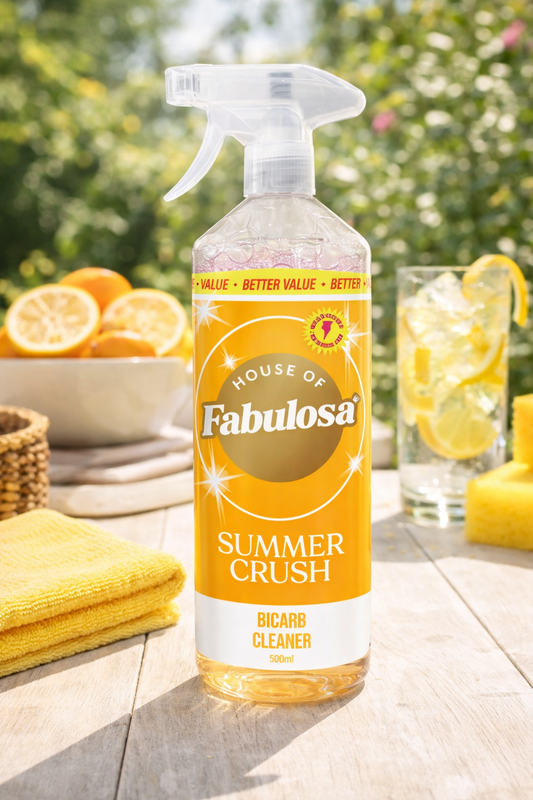
For an extra fresh scent after cleaning, you can choose Fabulosa cleaning products with a fresh fragrance. This is ideal when you value not only cleanliness but also a pleasant scent in the toilet, bathroom or hallway.
If the room still smells less than fresh, also check the bin. Toilet bins containing wipes, cotton wool, nappies or sanitary waste can quickly retain odours. In that case, this category pairs well with products to combat bin odours.
Which parts of the toilet should you clean?
Start with the toilet bowl. Apply a suitable toilet cleaner under the rim and let it work. Then brush the inside thoroughly, including along the waterline. Do not forget the underside of the rim, as this is often the cause of odours and buildup.
Then clean the toilet seat: the top, underside, hinges and edges. Dirt can easily remain around the hinges. Also wipe the flush button, lid, outside of the bowl and floor around the WC. Use clean cloths for this and replace them regularly. For this step, cleaning cloths for toilets and bathrooms are practical.
Finally, clean the small sink, tap, door handle and any bin. These are areas that are often touched or where moisture remains. A toilet is only truly clean when these contact points have also been cleaned.
Toilet brush, sponge or cloth?
Use a toilet brush for the inside of the toilet bowl. It reaches well under the rim and along the waterline. For the outside of the WC, it is better to use a cloth. Do not use the same cloth for the toilet and kitchen. Keep toilet cleaning products separate and wash reusable cloths regularly.
Sponges can be useful for tiles, the small sink or stubborn areas around the WC, but be careful with sensitive materials. Do not use a harsh sponge on surfaces that can scratch. A sponge can be useful for toilet bowls, ceramics and tiles, but hygiene is important: rinse it thoroughly, allow it to dry and replace it in good time.
Frequently asked questions about cleaning the toilet
Why does brown buildup keep coming back in the WC?
Brown buildup often returns because limescale and urine scale become attached to the toilet bowl. When the surface becomes rough due to limescale, new dirt sticks more easily. Therefore, do not just clean visible dirt; also tackle the limescale ring and buildup below the waterline. Allow a suitable toilet cleaner to work properly and then brush thoroughly. With stubborn buildup, repeating the process is often necessary.
How do you clean properly under the toilet rim?
Dirt often remains under the toilet rim where you cannot see it straight away. Apply toilet cleaner under the rim and let it work according to the instructions. Then use a toilet brush that can reach properly under the rim. Flush and check whether the odour or buildup keeps returning. If the WC continues to smell despite cleaning, the problem is often precisely under this rim or around the waterline.
What helps against urine scale in the toilet?
Tackle urine scale with a product suitable for toilet bowls and buildup. Allow the product to work for long enough, then brush the areas where the buildup has formed. Urine scale is often found around the waterline, under the rim or in places where urine remains. Do not wait too long before cleaning, as old urine scale becomes increasingly hard and difficult to remove.
How can you keep a WC smelling fresh for longer?
A WC stays fresh for longer if you clean not only the bowl, but also the seat, flush button, floor, bin and toilet brush. Odours often come from areas that are forgotten. Ventilate the room and empty the bin in good time. Only use fragrance products after the WC is clean. Otherwise, you temporarily mask the odour, but it will quickly return.
How often should you clean the toilet in a family home?
In a family home, a quick clean several times a week is sensible, especially with frequent use. Focus on the toilet seat, flush button, bowl rim and floor around the WC. You can do a thorough clean weekly, including under the rim, the small sink, bin and door handle. With young children or toilet accidents, cleaning more often is logical.
Why does the toilet smell musty after cleaning?
A musty-smelling toilet after cleaning often means that the source of the odour has not been addressed. Check the toilet brush, bin, floor, grout, mat, small sink and the rim under the toilet seat. Moisture and poor ventilation can also retain odours. Clean contact points and forgotten areas separately and air the room. Fragrance products only work properly when the source is clean.
Can you use the same cloth for the toilet and bathroom?
It is better to use separate cloths for the toilet and bathroom, especially if you do not want to clean the WC and sink with the same cloth. Toilet surfaces have a different hygiene burden from a sink or mirror. Use separate cloths or different colours for each room. Start with cleaner surfaces and finish with the WC. Wash reusable cloths thoroughly afterwards.
Why ViralCleaning?
At ViralCleaning, you will find products for a toilet that looks clean, smells fresher and is easier to maintain. For cleaning the toilet, combine toilet cleaners, all-purpose cleaners, cloths, sponges and fragrance products into a practical routine for your WC, bathroom and toilet room.